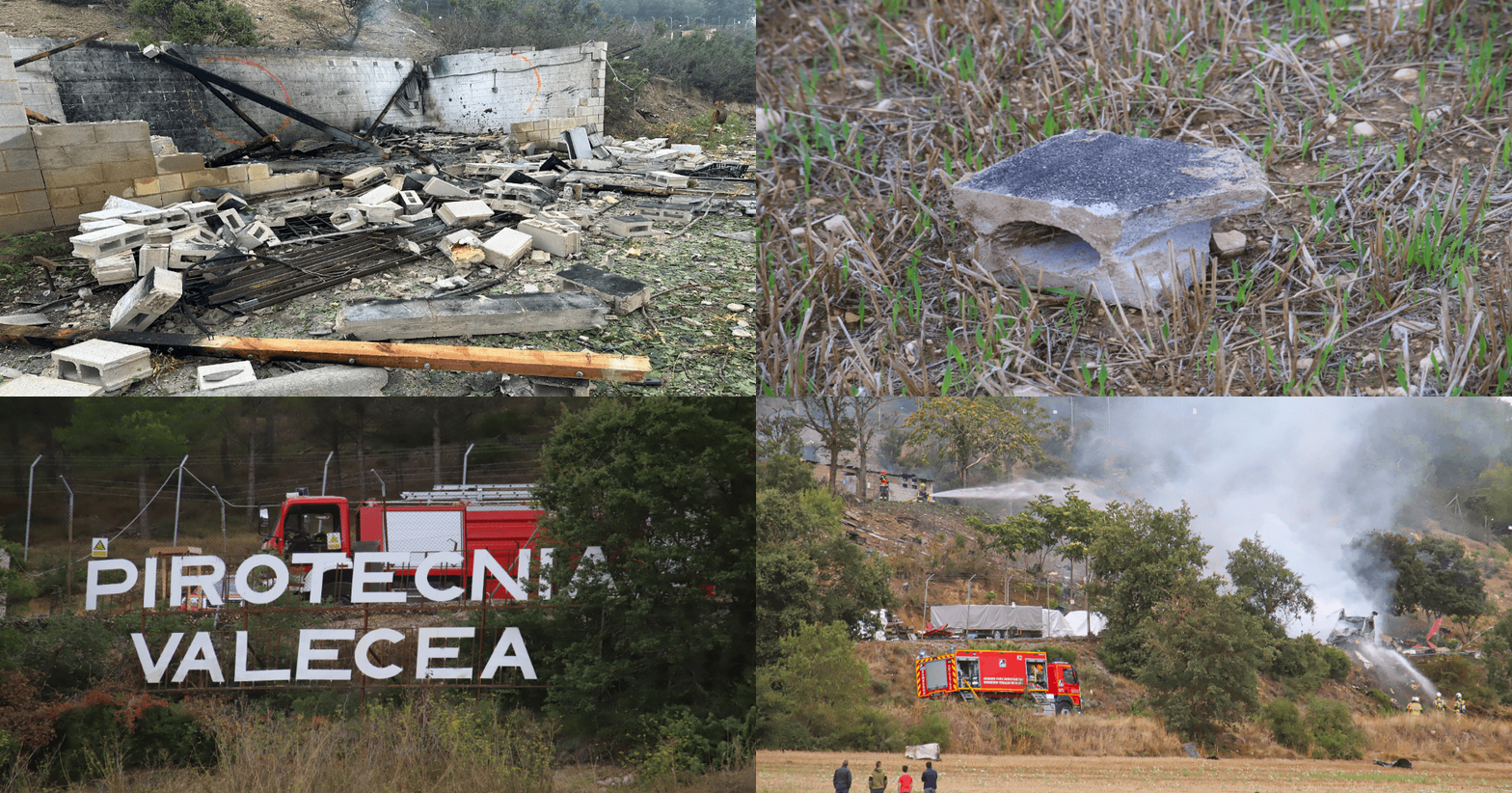
The peaceful industrial landscape of Lantarón, a municipality nestled in the province of Álava, was shattered on a recent Monday morning by a devastating fatal explosion at a pyrotechnics plant. The incident, which occurred at the long-established FML Pyrotechnics company in Bergüenda, has claimed one life and left another individual critically injured, casting a pall of grief over the local community. As authorities launch a thorough investigation, questions arise about the precise cause of such a catastrophic event in an industry inherently fraught with risk, even within a seemingly well-regulated environment. This article delves into the details of the tragedy, explores the background of FML Pyrotechnics, and examines the complexities of safety within the volatile world of pyrotechnic manufacturing, seeking to unravel the potential factors behind this somber Álava pyrotechnic tragedy.
The Tragic Incident at FML Pyrotechnics: A Detailed Account
The devastating blast struck the FML Pyrotechnics facility in Bergüenda, a town within the Lantarón municipality of Álava, at approximately 11:00 AM on Monday. The facility, situated around 44 kilometers from the provincial capital Vitoria and bordering the province of Burgos, quickly became the scene of a major emergency operation. Initial reports from the Ertzaintza, the Basque Police, confirmed the worst: one employee of the pyrotechnics company succumbed to injuries sustained in the Álava explosion.
Another employee was seriously injured, suffering burns to at least 60% of their body. The severity of their condition necessitated immediate and specialized medical attention. An Osakidetza (Basque Health Service) helicopter was rapidly deployed to the site, airlifting the injured individual to Cruces Hospital in Barakaldo (Bizkaia), a leading medical center equipped to handle such extensive trauma. The rapid response of emergency services underscores the gravity of the situation and the immediate priority placed on saving lives and containing further risks.
Upon notification, a comprehensive emergency response was mobilized. Ertzaintza officers quickly secured and cordoned off the entire FML premises as a precautionary measure, preventing unauthorized access and ensuring the safety of the surrounding area. Multiple units from the local Fire Department rushed to the scene to assess and manage any residual fire or explosion risks. Alongside them, various medical resources were deployed to provide on-site assistance and facilitate the evacuation of the injured. The Mayor of Lantarón, Koldo Salbidea, also arrived at the scene, offering support and providing initial insights into the incident and its impact on the close-knit community.
Lantarón's Enduring Legacy and the FML Family Business
FML Pyrotechnics is more than just an industrial facility; it represents a significant piece of Lantarón's heritage and economic fabric. According to information available on its website, the company boasts a remarkable history, having commenced its operations in 1875. This long-standing presence underscores its deep roots in the community and its enduring commitment to the craft of pyrotechnics manufacturing. For generations, FML has been a family-run enterprise, a detail that often implies a strong sense of tradition, dedicated craftsmanship, and a close-knit working environment.
The company's operations are relatively contained, employing a small but dedicated team of four individuals: the owner and three employees. This structure suggests a hands-on approach to production and a strong sense of camaraderie among the workforce. FML specializes in the manufacture of a diverse range of pyrotechnic materials, catering to various celebratory and event needs. Their product line includes traditional items such as tracas (strings of firecrackers), rockets, torches, and flares, all of which require meticulous handling and precise chemical formulation.
In the aftermath of the Álava pyrotechnic tragedy, Mayor Koldo Salbidea addressed the media, offering crucial context regarding the company's safety standards. He stated that, to his knowledge, FML Pyrotechnics was in full compliance with all relevant safety regulations, both municipal and those outlined in its internal safety plan. "Everything was correct," he affirmed, indicating that the company had maintained a diligent approach to safety. This statement highlights the shock and confusion surrounding an incident occurring in a facility believed to adhere to stringent protocols. In a gesture of solidarity and profound sorrow, the municipality of Lantarón has decreed three days of official mourning, reflecting the deep impact this explosión pirotecnia álava has had on its residents and the broader community.
Unraveling the Cause: The Investigation into the "Caseta de Labor" Blast
A critical piece of information revealed by Mayor Salbidea is that the explosión pirotecnia álava occurred in a "caseta de labor," or work shed, and not in the main storage warehouse where the bulk of the finished pyrotechnic products are kept. This distinction is paramount for investigators. Work sheds in pyrotechnics factories are typically dedicated to specific stages of the manufacturing process, such as mixing chemicals, filling devices, or assembling components. These areas often involve direct handling of raw materials and intermediate products, which can be highly sensitive and volatile. The fact that the explosion did not originate in the main storage facility suggests a localized incident during a production phase, rather than a widespread failure of storage safety.
The investigation into the cause of this devastating fatal explosion is now a top priority for technical experts. Unraveling the precise sequence of events leading to a pyrotechnic blast is an incredibly complex task due to several inherent challenges:
- Extreme Volatility: The very nature of pyrotechnic materials means they react rapidly and violently, often leaving little direct physical evidence.
- Destruction of Evidence: The force of an explosion can obliterate the immediate cause, making it difficult to pinpoint an ignition source or specific component failure.
- Subtle Triggers: Even seemingly minor factors—a tiny spark, static electricity, friction, impact, or contamination of materials—can initiate a reaction.
- Human Element: While tragic, human error, even when unintended, can sometimes play a role in industrial accidents. This could range from procedural deviations to misjudging material sensitivity.
- Chemical Reactions: Unforeseen chemical interactions or degradation of materials can also contribute to instability.
Investigators will meticulously examine the work processes being conducted in the shed at the time of the blast, analyze residue, interview witnesses (if any apart from the injured worker), and review maintenance records and safety protocols. Their goal is to reconstruct the events with as much accuracy as possible, not only to determine culpability but, crucially, to prevent similar tragedies in the future. The mayor's initial assertion that "everything was correct" regarding safety points to the possibility of an unforeseen or exceptionally rare confluence of circumstances, or a factor that slipped through even robust safety nets.
Pyrotechnic Safety: Essential Protocols and Lessons Learned
The pyrotechnics industry, by its very definition, involves working with highly energetic and potentially dangerous materials. Consequently, safety protocols in such environments must be exceptionally stringent and continuously reinforced. This incident, while still under investigation, serves as a grim reminder of the perpetual need for vigilance and adherence to best practices.
Even for a company like FML, with a century-long history and an apparently strong safety record, industrial accidents can occur. This highlights that safety is not a static state but an ongoing commitment requiring constant review and adaptation. Key safety protocols typically include:
- Strict Handling Procedures: All raw materials and finished products must be handled with extreme care, often in controlled environments to minimize friction, static, or impact.
- Material Segregation: Incompatible chemicals must be stored and handled separately to prevent accidental reactions.
- Environmental Controls: Temperature, humidity, and ventilation are crucial to prevent material degradation or increased sensitivity. Work sheds, in particular, often require precise environmental management.
- Personal Protective Equipment (PPE): Employees must wear appropriate PPE, including flame-retardant clothing, eye protection, and often specialized footwear to prevent static discharge.
- Regular Maintenance and Inspection: Equipment and facilities, especially work sheds, should undergo routine checks for wear, electrical faults, and structural integrity.
- Comprehensive Training: All employees must receive continuous, rigorous training on safe operating procedures, emergency responses, and hazard recognition.
- Emergency Preparedness: Factories must have detailed emergency plans, including clear evacuation routes, accessible fire suppression systems, and well-drilled response protocols.
- Process Isolation: Dangerous processes are often isolated in separate, reinforced structures (like work sheds) to contain potential blasts and minimize damage to other parts of the facility and personnel. While this strategy aims to contain damage, it also means that a failure within such a structure can be particularly devastating for those inside.
- Internal Safety Audits: Beyond external compliance, regular internal audits help identify potential weaknesses or areas for improvement in safety protocols and implementation.
The tragedy in Lantarón underscores that even with a strong foundation of safety, the inherent risks of pyrotechnics demand continuous evolution of safety practices. Lessons learned from this and similar incidents globally contribute to the refinement of industrial safety standards, aiming to make such hazardous professions as safe as humanly possible.
The explosión pirotecnia álava at FML Pyrotechnics is a deeply tragic event that has left a profound mark on the community of Lantarón. While investigators work diligently to ascertain the precise cause of the blast in the work shed, the incident serves as a stark reminder of the inherent dangers within the pyrotechnics industry. The loss of life and severe injury to an employee underscore the critical importance of unwavering commitment to safety protocols, continuous training, and robust emergency preparedness. As the community mourns and supports the victims and their families, the industry itself will undoubtedly reflect on the implications of this incident, reinforcing the message that in the world of pyrotechnics, safety is not merely a regulation to be met, but a paramount and ongoing responsibility.